
Children are extremely curious from their early childhood days. They try all the things and figure out how everything around them works. So, while playing they get to explore a lot of things. This is why play-based learning matters a lot as it helps young children grab things fast. As per research also, play-based learning fits young children best.
For young kids, play is not just fun. It is how they think and try out solutions. It is also how they learn social rules and practice working with others. When adults understand this, they can better pick what supports a child’s growth.
What Play-Based Learning Actually Means?
Play-based learning can show up in a school day in a simple way. Teachers add guided play to the schedule. Instead of relying on worksheets or long speeches, adults plan areas where children can roam and test out ideas. The point is that kids will wonder, ask, try, and make.
In this kind of classroom, learning often looks like:
- Child-led: Children steer the activity. They go after what grabs their attention and what they want to figure out.
- Hands-on: Kids work with real materials. They may use blocks, art tools, or sensory bins.
- Adult supported: Trained staff steps in when it helps. They join in and ask questions that let children explain what they are doing.
Key Benefits of Play-Based Learning
Play based learning helps a child grow in many early ways. Here are the main areas play can shape.
1. Thinking skills and how children solve problems
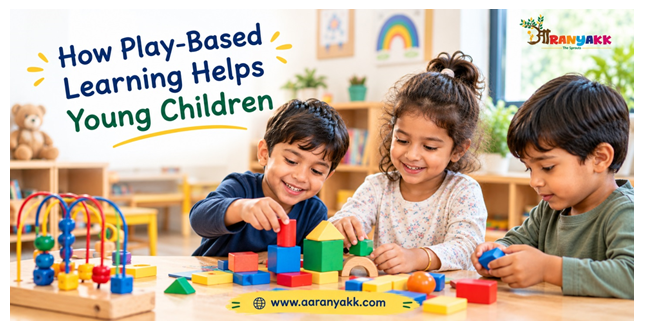
When a child stacks blocks or lines up beads by color, they are using early math and science skills. They watch how items drop, how to balance a tower, and how objects can be placed in space. If something falls or does not fit, they often try again. This play can help children feel steadier when they hit a problem. It can also lead them to look for fresh ideas later on, even when they move into STEM topics.
2. Talking and listening
Play gives kids real reasons to talk. In pretend games, they may swap roles, like acting out a clinic or a shop. While painting or mixing safe materials, they describe their experiences. As time passes, they start making clear sentences and pay heed to others. Working with classmates during play can build language skills better than simple drills.
3. Feelings and relationships
In group play, children practice every day social tasks. They get to learn about sharing, waiting for their turn, making deals, avoiding small fights, and more. Play also lets kids test big emotions without danger. When they act out family routines, they can step into someone else’s shoes and show more care for others.
4. Physical and Motor Skill Refinement
Big body skills can grow when kids run, climb, and practice balance. These tasks work many muscle groups. They also help kids move with more control. Over time, they support a strong and healthy body.
Small body skills build too. Play dough can be molded. Child-safe scissors can be used with care. Beads can be strung on a thread. These activities help with hand and eye control. They also make fingers stronger for later writing.
Play-based learning matters during early schooling. When parents want to start schooling their kid, they often search for a setup that mingles free play with calm lessons. Good early years centers plan the day with learning areas. Kids may use a reading nook, a place for blocks and building, or a role-play corner. These spaces let children make choices. They also help kids learn self-control.
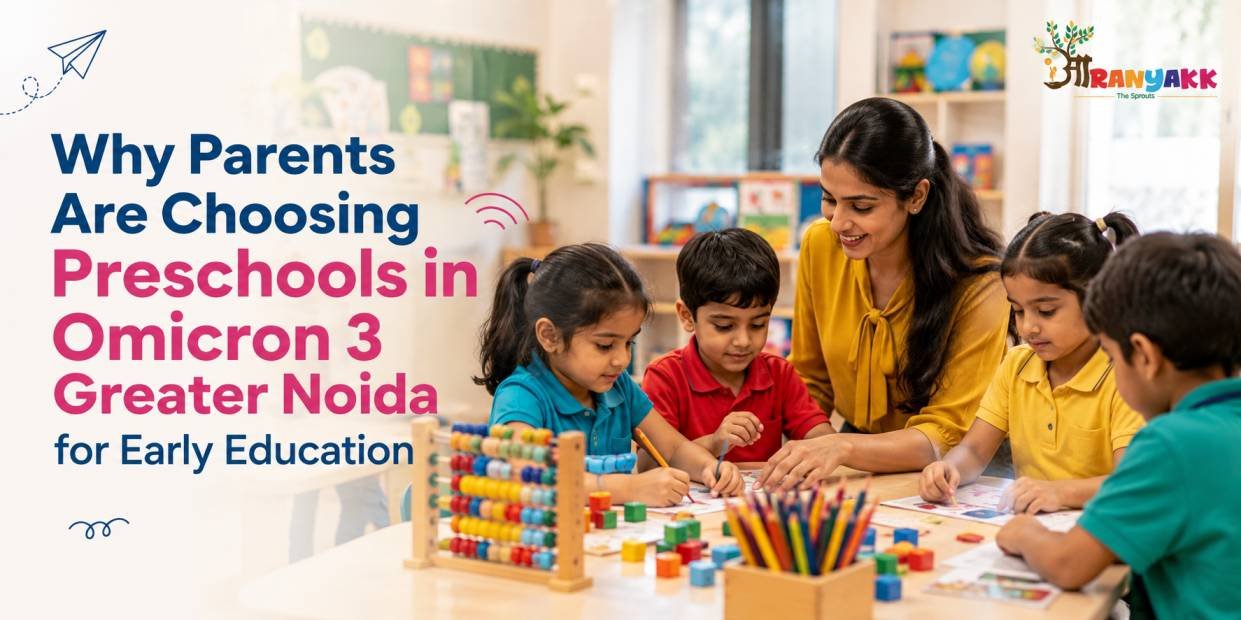
What Parents in Omicron 3 Greater Noida are looking for?
For parents in Greater Noida, the place you choose is a key point. The method used there is extremely important to check as a good preschool helps in adjusting the children to the school routine. You can find a good play school in Omicron 3 Greater Noida by checking online.
A kindergarten school in Greater Noida should also keep safety in mind. It should offer indoor and outdoor spaces for active play. These spaces can spark new questions and encourage thinking. They also support emotional growth as kids settle in.
After the toddler stage, many families look for a preschool in Omicron 3 Greater Noida. The best kind of program keeps playing part of the learning day. This helps children move from early exploration to primary school.
How Parents Can Be Helpful in Offering Play-Based Learning at Home?
There is no need to invest in costly toys, your kid can learn at home by simply playing everyday games.
Try these ideas:
- Use materials with many uses
A cardboard box, building blocks, or cloth scraps can work in new ways each day. A toy with one button cannot do that as easily.
- Step into make-believe
When your child pretends, you can join in. Let them decide what happens next. Follow their lead.
- Let it get messy
Water play, sand, and finger paint help your child feel textures and practice small movements. That kind of play supports the brain.
Play is not something separate from learning. It is a part of it. When you support a child’s urge to explore and make things, they gain confidence. They also build creativity and grit. If you are choosing early learning options, pick ones that keep playing at the center. That choice helps with school skills and a lasting desire to learn.